
Achieving the 2050 climate goals requires a substantial global investment of USD 125 trillion. Of this, USD 32 trillion needs to be allocated between 2021 and 2030 to priority sectors such as energy, transport, construction, industry, low-emission fuels, and agriculture, forestry, and other land use (AFOLU) [1]. Within Latin America and the Caribbean (LAC), the climate investment gap has been estimated at USD 1.9 trillion until 2030. To close this gap, significant investment is required by both the public and private sectors to support the economy to achieve a climate transition. Private actors could provide up to 70% of this financing globally, presenting significant opportunities for investors [2].
What is climate transition?
Climate transition refers to the transformative process of shifting economic, social, and energy systems from a model heavily reliant on fossil fuels and characterized by high greenhouse gas (GHG) emissions to one that is sustainable, with very low or zero emissions, and resilient to climate change. This comprehensive process encompasses a wide array of changes, including the adoption of renewable energy sources, enhancement of energy efficiency, innovation in clean technologies, development of green infrastructure, and the promotion of sustainable consumption and production practices [3].
What role do Financial Institutions (FIs) play in the climate transition?
FIs can play a key role to mobilize capital towards the sustainability agenda. In general, FIs have relatively low Scope 1 and 2 emissions – direct emissions controlled by the company and indirect emissions coming from purchased energy. The majority of their impact results from financed emissions – GHG emissions linked to investment and lending activities. CDP, a non profit organization focused on emissions disclosure, has estimated that FIs’ financed emissions can be up to 700 times greater than their own emissions [4]. The financial sector has the ability to make decisions that guide the trajectory of emissions, engaging with real-economy companies due to their financing needs. This is why the role of FIs becomes crucial in facilitating the climate transition through their clients.
The financial sector has taken significant steps towards decarbonizing the economy, which can be demonstrated by the different initiatives that have resulted related to this topic. One example is the creation of the Glasgow Financial Alliance for Net Zero (GFANZ) in 2021. This initiative aims to coordinate the financial system’s efforts to achieve a net-zero emissions economy through the development of coherent transition plans that are based on science and aligned with the 1.5°C target of the Paris Agreement [5]. Additionally, alliances and organizations have been established to guide FIs in the steps needed to achieve the transition. Some of the most notable include the UNEP FI Net Zero Asset Owners/Banking Alliance (NZAOA/NZBA), the Partnership for Carbon Accounting Alliance (PCAF), the Task Force on Climate-Related Disclosures (TCFD), the Science Based Target initiative for Financial Institutions (SBTi FI), and Task Force on Climate-Related Financial Disclosures (TCFD). Within LAC, regional initiatives, such as the GFANZ LAC Network and the PCAF Latin American team, have been formed in order to provide specific guidance for FIs in the region.
LAC faces a volatile financial market and a tough political and regulatory landscape, which can block or delay the deployment of investments in technologies and decarbonization projects. Additionally, the lack of local emerging technologies necessitates costly imports and adaptations, complicating the region’s shift to a low-carbon economy. Therefore, it is crucial for financial institutions to actively facilitate a stable market and promote regulations that enable investments in climate transition. [6].
How can FIs implement a climate transition plan?
There are two main levels of actions for FIs to develop transition plans – (1) Foundational Actions – which include accounting and disclosing emissions, and (2) High Level Commitments – which include setting targets and taking action. A description of these actions is presented in Figure 1 below. [7]
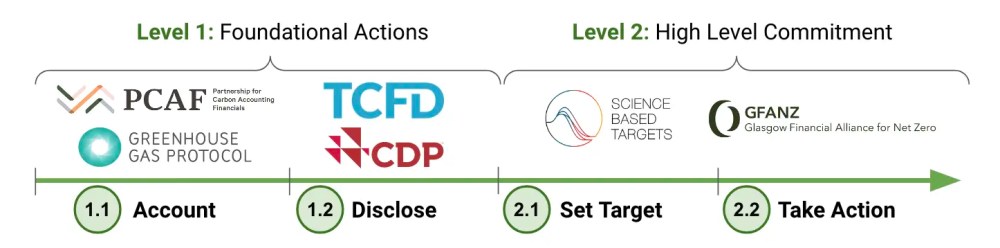
Figure 1. Actions for FIs to develop transition plans
- Account for the GHG emissions: It is important for FIs to integrate the accounting of their portfolio emissions using PCAF standards for financed emissions and GHG Protocol for Scope 1 and 2 emissions.
- Disclosure through market-recognized standards: FIs should report on Scope 1, 2, and 3 emissions to stakeholders and investors using established standards, such as the TCFD and CDP.
- Set science-based emission reduction targets: FIs can adhere to the SBTi FI standards to set science-based decarbonization targets.
- Take action: FIs should design and implement a transition plan in order to reach their targets. GFANZ offers a guide with five main themes (Foundations, Implementation strategy, Engagement strategy, Metrics and targets and Governance) to address for successful implementation.
While the gap in the region is significant, the financial sector in LAC is showing interest in taking action for the planet. Currently, 47 financial institutions are PCAF signatories [8], and various banks have set ambitious goals and strategies focused on decarbonizing their portfolios and aligning their operations with the Paris Agreement. For example, international banks with subsidiaries in LAC, like BBVA, have committed to maintaining a net-zero emissions portfolio by 2040 [9]. Similarly, regional banks like Bancolombia announced in 2023 their commitment to becoming a net-zero emissions bank by 2050, following science-based targets endorsed by SBTi [10].
Climate transition as a value-added for FIs
Adopting decarbonization goals is a significant challenge for FIs, and integrating it into the institution’s operations becomes complex since the majority of their GHG emissions are associated with their client portfolio emissions [11]. This implies that banks must take action to have reliable measurement of their own clients’ emissions.
Investors are increasingly interested in financing assets that comply with the Paris Agreement, and regulations are showing greater focus in promoting a carbon-neutral economy, thus causing transition risk in high emission sectors. In this context, it is important for FI’s to start focussing on transition. As it becomes reasonable to expect that the cost of funding will become cheaper for those FIs with transition goals. Similarly, due to climate change transition risk, the impact of the emission profile of portfolios will increasingly affect the risk profile of financial sector actors, and all those who are pioneers in implementing their transition plans could benefit from estimated growths in profitability. [12].
The financial sector in LAC has the capacity to enable the implementation of concrete transition goals, seizing opportunities while contributing to achieving these targets and avoiding the irreversible impacts of climate change. It is essential that these institutions support their clients on their path towards a low-carbon economy. This includes actively managing sustainability, establishing internal structures and methodologies to integrate ESG criteria into corporate strategy, specifically within business operations through a Sustainable Finance team [13]. Similarly, given the regulatory and political context of the region, FIs may have the ability to influence economic and environmental policy through their investment decisions, steering the market towards more sustainable practices [14].
Global warming is an urgent issue that requires immediate action, as the measures currently in place are insufficient to prevent the critical “point of no return” [15]. It is essential for all economic actors, especially financial institutions, to accelerate their efforts to meet the targets set in the Paris Agreement. Financial institutions in LAC have a significant capacity to direct capital towards projects that not only reduce emissions but also support the conservation of ecosystems which are vital for capturing GEI. The challenge is substantial, and proactive support through sustainable development and strategic financing is crucial to progress toward a safer, greener future.
—
Pedro Paniagua is an Associate at HPL and holds a B.Sc. in Electric and Electronic Engineering from UNAM and an M.Sc. in Finance and an MBA from ITAM. Pedro joined HPL in March, 2022. Since then, he has supported more than 12 consulting projects related to thematic bond structuring for sovereigns and financial institutions and developing sustainable finance strategies for banks. Prior to joining HPL, Pedro brings four years of experience in technology projects for Banco de México and one year in risk management in the private debt sector, where he analyzed the financial behavior of a senior debt portfolio with over 50 SMEs in Latin America.
—
References
[1] GFANZ. Race to Zero Financing Roadmap. Available here.
[2] Ibid
[3] BCR (2023). Climate Transition Plans That Enable Business Transformation.Available here.
[4] CDP (2021). Finance sector’s funded emissions over 700 times greater than its own. Available here.
[5] CDP (2022). Climate Transition Plans. Available here.
[6] BID (2020). Rutas de descarbonización profunda en América Latina: desafíos y oportunidades. Available here.
[7] SBTi (2022). Financial Institutions Training Module 2: Voluntary finance climate action ecosystem. Available here.
[8] PCAF (2024). Financial institutions taking action. Available here.
[9] BBVA (2021). Objetivos de descarbonización de BBVA: ¿Qué significan y cuál es su alcance?. Available here.
[10] Bancolombia (2022). Estrategia de cambio climático. Available here.
[11] SBTi (2022). Financial Sector Science-based Targets Guidance. Available here.
[12] Bain Company (2022). Brief Banks’ Great Carbon Challenge. Available here.
[13] University of Cambridge (2022). Leadership Strategies for Client Engagement: Advancing climate-related assessments. Available here.
[14] BID (2020). Rutas de descarbonización profunda en América Latina: desafíos y oportunidades. Available here.
[15] Climate Action Tracker (2023). State of Climate Action 2023.Available online here.
–