
Artificial intelligence (AI) is transforming business models by streamlining processes, improving operational efficiency, and processing vast amounts of information at unprecedented speed. This shift is fundamentally changing how decisions are made.
In sustainability, AI unlocks clear opportunities: more accurate forecasting, improved resource allocation, faster responses to risk, and reduced losses in climate-sensitive sectors. These benefits are particularly relevant in Latin America and the Caribbean (LAC), a region highly exposed to droughts, floods, and storms, where gaps in information, infrastructure, and response capacity remain significant. [1]
In this blog, we explore how AI is becoming a powerful driver in helping companies make better decisions in response to the impacts of climate change. We highlight how AI-enabled technologies are already being adopted globally to accelerate sustainable solutions, and how these tools can help companies in Latin America and the Caribbean move faster in their climate transition, unlocking new opportunities that were previously out of reach.
AI as a Strategic Driver of the Climate Transition
AI can accelerate the sustainability transition by acting as a powerful general-purpose technology capable of driving deep systemic change. By increasing the speed, scale, and effectiveness of innovation, AI enables low-carbon solutions to be developed, adopted, and deployed more rapidly, while also improving how capital is allocated across climate-resilient investments. This potential is reflected across five key areas through which AI can help build a more effective response to climate threats [2]:
- Transform complex systems, such as energy, transport, cities, land use, and finance by improving coordination, real-time optimization, and system-wide efficiency.
- Accelerates technology discovery and resource efficiency by supporting scientific breakthroughs, improving design processes, and maximizing the productive use of assets across value chains, thereby reducing waste and emissions.
- Enables behavioural change by translating complex data into actionable, personalized insights that guide more sustainable choices by consumers, firms, and investors.
- Strengthens climate modelling and policy design by improving climate forecasts, simulating policy scenarios, and supporting evidence-based decision-making.
- Plays a critical role in managing adaptation and resilience, enhancing early warning systems, disaster preparedness, and long-term planning in the face of growing climate risks.
The development of new technologies and the speed at which they become financially viable is critical for the transition of hard-to-abate or high emitting sectors. In this context, exploring and scaling AI applications across these areas represents a significant opportunity to accelerate climate action and advance the achievement of climate goals.
Scaling AI Solutions for Climate Action in LAC
In LAC, AI integration remains uneven and less advanced than in more mature AI ecosystems, however, adoption is increasingly concentrated in sectors critical to economic development, nature conservancy and resource efficiency. This trend is particularly important in a region highly exposed to climate risks and constrained by gaps in policy implementation and infrastructure. While digital inclusion challenges persist across many countries, others such as Brazil, Chile, and Uruguay [3] have developed the connectivity and institutional readiness needed to deploy more advanced AI applications. The following case studies illustrate how AI is already being applied across the region to support climate mitigation, adaptation, resilience, and more efficient resource use.
Agricultural Resilience
In the agricultural sector, AI can support productivity gains, resilience, and resource efficiency while strengthening adaptation to climate change. AI models trained on local data such as weather patterns, soil conditions, and crop performance enable the generation of context specific insights that support data driven decision making. These models help farmers optimize planting schedules, irrigation, fertilizer application, and pest management under changing climatic conditions.[1]

Nature Conservation and Adaptation
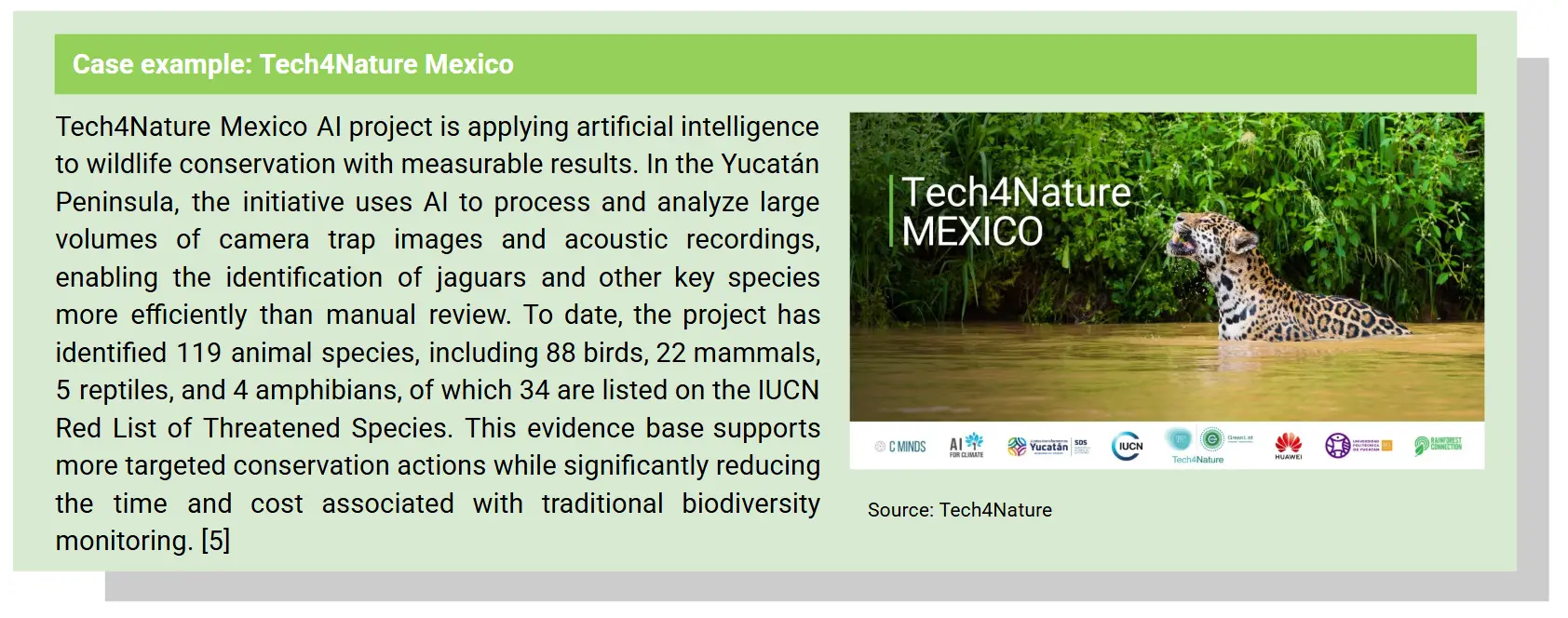
In the conservation sector, AI supports nature protection efforts while improving the economic viability of conservation activities for small and medium enterprises. AI applications using satellite imagery and remote sensing enable continuous monitoring of ecosystems, allowing for the detection of land use change, forest degradation, and biodiversity loss. Combined with climate and drought forecasting models, AI can also estimate variables such as vegetation health and canopy water content, helping identify areas most exposed to climate stress, forest fires, and ecosystem collapse.
As an example of forest fire prevention in Mexico, researchers at the National Autonomous University of Mexico (UNAM) are using AI to support the early detection of forest fires by identifying smoke patterns from satellite and atmospheric data. Machine learning models trained to recognize smoke signatures enable near real time detection of potential fire events, supporting faster response and improved wildfire management. This application strengthens climate adaptation and disaster risk management by improving early warning capabilities for climate driven fire risks. [6]
Energy Mitigation Strategies
In the energy sector, AI supports the integration of variable renewable energy sources while improving system efficiency, reliability, and emissions performance. AI based forecasting models enhance the integration of solar and wind power by improving short term and real time predictions of generation and demand, helping grid operators balance intermittency more effectively. AI also enables the detection and reduction of technical and non technical losses, predictive maintenance of grid assets to prevent outages, and demand management, particularly in dense urban areas. Together, these applications facilitate a more efficient integration of renewable energy into the electricity mix, reducing the need for fossil based generation and contributing to lower emissions across the power system. [1] The figure X shows the use of AI across the energy value chain.
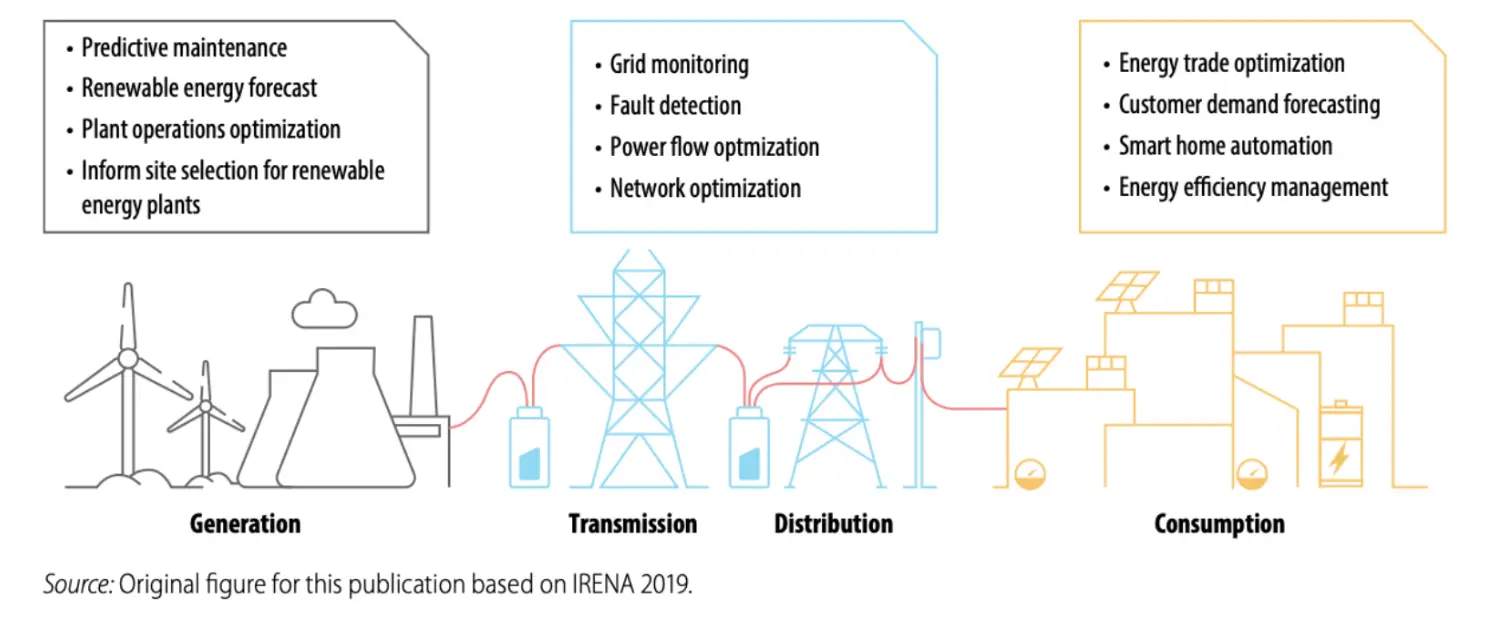
Figure 1. Use of AI across the energy value chain [Source: World Bank]
Water Resilience and Efficiency
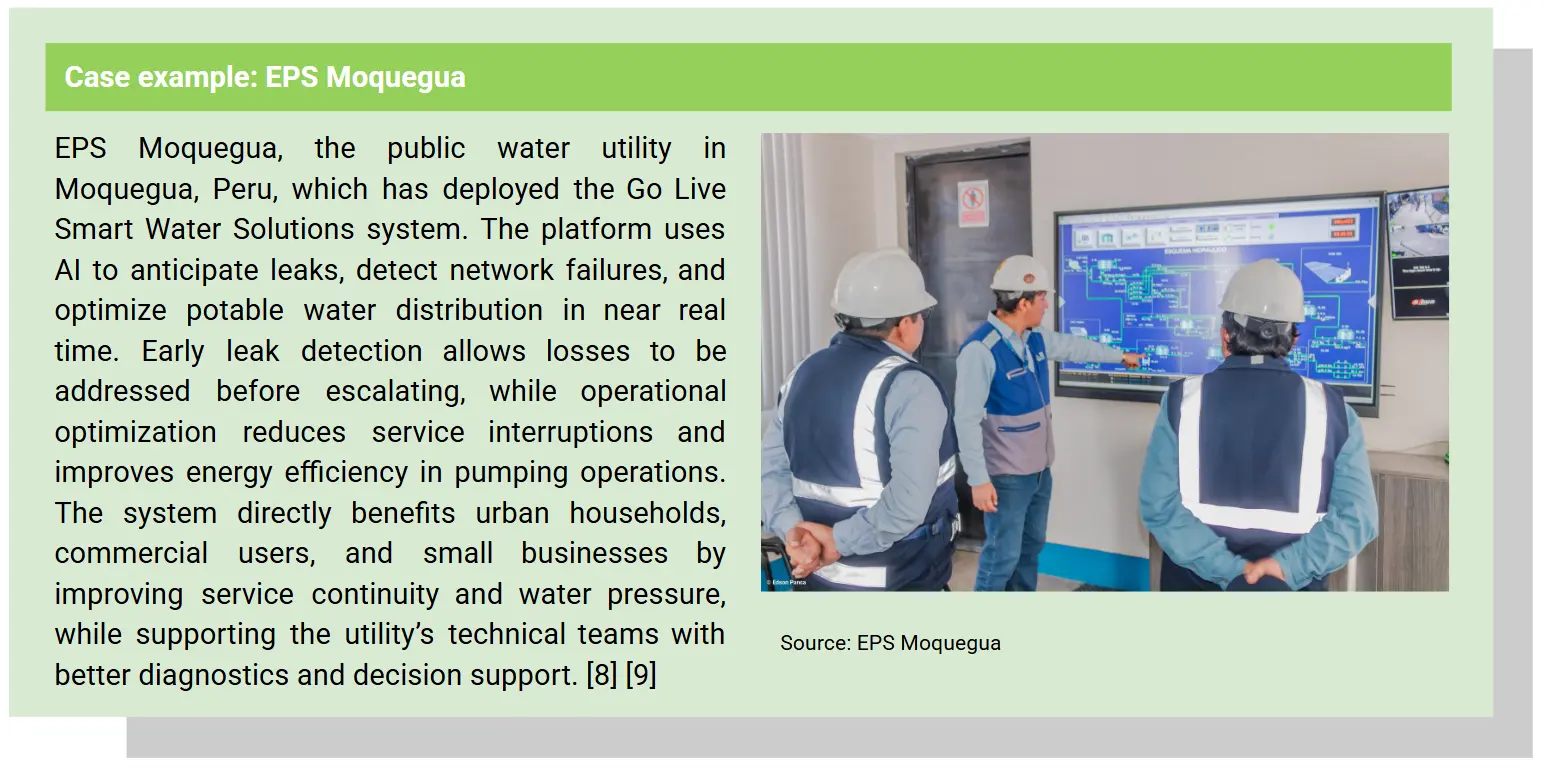
In the water sector, AI enables more efficient, resilient, and cost effective management of water systems by improving operational performance and investment decisions under increasing climate stress. AI applications support early leak detection and the reduction of non revenue water, addressing one of the main sources of inefficiency in urban water utilities. Machine learning models can also optimize pumping operations, strengthening the energy water nexus by reducing electricity consumption associated with water extraction and distribution. By integrating operational and asset level data, AI can inform investment prioritization, directing capital toward the most critical network interventions. [7]
Financial Resilience and Risk Management
In the financial sector, AI improves risk assessment and capital allocation by enhancing traditional models with climate-related variables and forward-looking stress indicators. Machine learning and other AI techniques can process large and heterogeneous datasets, including historical financial data, weather and climate projections, and socio-economic signals, to refine credit risk, market risk, and operational risk models. In several countries, these improved models have helped banks and regulators integrate climate risks into solvency assessments and portfolio stress tests, making financial institutions more resilient to climate-driven disruptions.
AI also supports innovation in climate risk transfer instruments by enabling more accurate pricing and structuring of products such as parametric insurance. Parametric insurance triggers payouts based on predefined climatic indicators, such as rainfall or temperature thresholds, reducing delays and uncertainty in claims processing. This approach is particularly relevant in Latin America and the Caribbean, where small farmers and other climate-vulnerable groups often face limited access to traditional insurance and financial buffers. By improving risk coverage, enabling faster payouts, and strengthening financial resilience in the face of climate shocks, parametric insurance can play a critical role in the region, as explored in a recent HPL blog post on parametric insurance and climate resilience in agriculture.
Turning AI Opportunities into Impact in LAC
While AI has been integrated across nearly all sectors globally, its adoption is highly concentrated in data and technology-intensive industries. According to the OECD’s sectoral taxonomy of AI intensity, the sectors with the highest levels of AI integration include telecommunications, where AI is widely used for network management, traffic optimization, predictive maintenance, and customer service; IT services, which play a central role in developing and deploying AI solutions across the economy; finance and insurance, where AI supports risk management, fraud detection, and predictive analytics; media, which relies on AI for content recommendation and audience analysis; and scientific research and development, where AI accelerates data analysis and innovation processes. [10]
For governments, financial institutions, and the private sector, the challenge ahead lies in moving from isolated applications to integrated strategies that embed AI into climate planning, investment decisions, and service delivery. Doing so can help accelerate the transition toward more resilient, inclusive, and sustainable development pathways across the region. TSectors and firms that integrate AI more rapidly and systematically into their operations are likely to gain competitive advantages over those that do not. At the same time, the adoption of AI solutions for climate adaptation and mitigation can play a critical role in reducing vulnerability to climate risks across the region.
However, scaling these solutions will require more than technological innovation alone. Realizing the full potential of AI in LAC depends on strengthening digital infrastructure, improving data availability and security, aligning regulatory frameworks, and mobilizing capital toward high impact applications. When these enabling conditions are in place, AI driven solutions offer a powerful opportunity to advance climate and sustainability objectives in LAC, particularly given the region’s high climate vulnerability and the investment gaps associated with meeting international targets. As demonstrated throughout this analysis, AI is already supporting more efficient resource use, stronger resilience, improved risk management, and better informed decision making across climate critical systems.
—
Gabriela Sepúlveda is a sustainability professional with over 12 years of experience in the financial sector, focusing on sustainable finance, risk management, and strategic planning. At HPL, she has supported the execution of three consulting projects focused on thematic bonds portfolio analysis and KPI reporting and monitoring, green finance strategy development, and climate change assessments for sovereign entities, development banks, and financial institutions in LAC. Since April 2024, she has served as a professor of Sustainable Finance at Tecnológico de Monterrey, where she develops and teaches courses on ESG principles, regulations, and methodologies. Previously, she was Associate Director at Sustainable Fitch, where she analyzed ESG-labeled debt, issued Second Party Opinions (SPO), and led research on sustainability trends across Latin America. From 2019 to 2021, Gabriela worked as Investor Relations Manager at Banregio, overseeing financial reporting, investor communications, and strategic initiatives. She holds a Bachelor’s degree in Economics and a Master’s in Corporate Social Responsibility from Universidad Regiomontana, a Securities Analysis certification from IEB (Madrid).
—
[1] World Bank (2025). Digital progress and Trends Report 2025. Available here.
[2] npj Climate Action (2025). Green and intelligent: the role of AI in the climate transition. Available here.
[3] CEPAL (2025). Índice Latinoamericano de Inteligencia Artificial (ILIA) 2025. Available here.
[4] World Economic Forum (2022) This young leader is helping farmers connect technology with agriculture. Available here.
[5] México desconocido (2022). La inteligencia artificial ayuda en la conservación del jaguar en Yucatán.7 Available here.
[6] UNAM (2025). Trabajan con IA en detección de humo generado por incendios forestales. Available here.
[7] ADB (2020). Using Artificial Intelligence for Smart Water Management Systems. Available here.
[8] Anglo American (2025) Moquegua se convierte en pionera en el uso de inteligencia artificial para cuidar el agua. Available here.
[9] EPS Moquegua (2023). Moquegua usará inteligencia artificial para la gestión del agua potable. Available here.
[10] OECD (2025). How do different sectors engage with AI?. Available here.