
1.What is climate resilience and how does it relate to finance?
Despite international efforts, 2024 is shaping up to be one of the hottest years on record. Both this past August and the same month in 2023 were the warmest ever recorded globally. The global average temperature over the past 12 months, from September 2023 to August 2024, reached a new record, reaching 0.76°C above the 1991–2020 average and 1.64°C higher than the pre-industrial levels of 1850–1900 [1].
This brings significant physical consequences, with natural disasters becoming more frequent and severe. In Latin America, the increasing occurrence of major climate events highlights the urgent need to prioritize climate change action. The devastating floods in Rio Grande do Sul, Brazil, have caused severe damage to infrastructure [2] and agricultural production [3]. In Mexico, drought has strained water supplies and affected food production [4], while the melting glaciers in Patagonia raise serious concerns about rising sea levels [5]. These climatic events disproportionately impact vulnerable populations, who often lack access to basic services, suffer health problems, or face barriers to commute for work.
To address the effects of these climate events, a community, system, or economy can invest in adaptation and resilience. Climate adaptation and resilience are closely related concepts that, when combined, seek to manage and minimize risks, reduce vulnerabilities, and strengthen systems’ ability to cope with impacts of natural hazards. Adaptation involves adjusting practices and structures to manage and limit natural and climate risks, while Resilience refers to the ability of systems, communities, and economies to withstand, adapt, and transform in response to climate-related risks. [6]
2.Why is it crucial to consider climate resilience in business and finance
The increasing frequency and intensity of extreme weather events make it essential for businesses to be prepared to adapt and mitigate losses. This is not only critical for the survival of companies but also for the well-being of the communities they serve.
As mentioned in HPL’s previous blog (Demystifying climate risks for financial institutions), it is essential for financial institutions to recognize, manage, and reduce the climate-related risks affecting their operations. Banks have a valuable opportunity to strengthen climate resilience, not only by managing risks but also by supporting businesses and communities in adapting to, and thriving in, a changing climate. By actively financing climate adaptation initiatives, banks can unlock new opportunities, such as investing in resilient infrastructure, supporting sustainable agriculture, and funding innovative technologies. These initiatives help mitigate risks, expand portfolios, strengthen client relationships, and position banks as leaders in the transition toward a sustainable economy.
Although climate finance has significantly accelerated in recent years, the majority of resources have been primarily directed towards climate change mitigation, with considerably less emphasis placed on adaptation efforts. According to a study by the Climate Policy Initiative [7], during the 2021-2022 period, only 5% of global climate financial flows were allocated to adaptation, while 91% were directed toward mitigation, and 4% aimed at both objectives. Notably, funding for adaptation has predominantly come from public sources, such as governments, development finance institutions, and state-owned financial institutions. This creates a substantial opportunity for the private sector to increase its involvement in financing adaptation initiatives, an area with significant potential for both impact and innovation.
3.Where should banks begin when financing climate resilience?
To start financing climate resilience, a bank must first define what it means for the organization. This can be done by outlining the type of financing it will offer, establishing eligibility criteria, and identifying the indicators to monitor impact.
The United Nations Office for Disaster Risk Reduction (UNDRR) released a Guide for Adaptation and Resilience Finance in April 2024 [8]. This guide provides a list of eligible assets based on adaptation and resilience, covering climate-related (meteorological and hydrological) events and non-climate-related natural hazards (such as earthquakes).
The guide divides adaptation and resilience investments into two categories:
- Adapted Investments directly address climate risks by protecting specific assets or activities, such as upgrading irrigation systems for better water efficiency.
- Enabling Investments create conditions that support broader adaptation and resilience efforts, like building coastal defenses to protect against flood risks. These investments may take time to show their full benefits.
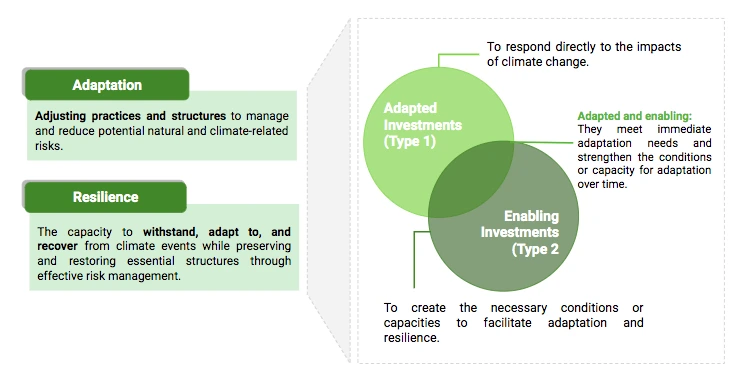
Figure 1. Types of investments in adaptation and resilience
Adaptation and resilience concerns are integral in many sectors. For example, implementing resilient agricultural systems is increasingly crucial in the face of prolonged droughts and intense flooding. Similarly, resilient infrastructure is essential for sectors such as industry, energy, transportation, and others.
4.What tools can banks use to assess climate risks and identify potential financing opportunities?
Other tools exist that can help banks to better understand and quantify climate risks, as well as to uncover potential financing opportunities in resilient projects. One example is the World Bank’s Resilience Rating System [9], a valuable tool for assessing project resilience that evaluates projects in two dimensions:
- Project Resilience: Evaluates whether a project can achieve its goals by addressing climate risks, incorporating adaptation measures, and maintaining economic viability.
- Resilience through the Project: Assesses whether the project enhances climate resilience in the broader community or sector, aiding adaptation to climate change.
Moreover, to determine which financing options are eligible, it is crucial to understand the climate risks to which the bank’s clients are exposed. Many countries in Latin America and the Caribbean have interactive maps that help identify climate risks, such as floods, droughts, and extreme weather events. Integrating this information into a bank’s decision-making and data analysis ensures alignment with current climate realities.
An example is the Climate Risk Atlas (ARClim) from Chile’s Ministry of Environment [10]. This interactive map displays climate threats, exposure, and sensitivity across various economic sectors. The level of detail is so high that, for instance, in agriculture, one can see how climate change affects the productivity of maize, wheat, or even almond crops.
Brazil also has interactive maps through the Adapta Brasil platform [11], where risks of flooding, droughts, or land displacement can be analyzed at a disaggregated level by state and municipality.
Utilizing these tools helps banks not only assess risks but also shape the narrative of what constitutes resilience, as they align financing with projects that proactively respond to climate threats.
5.Conclusion: How can banks turn climate risks into opportunities for sustainable growth?
Climate resilience financing presents a significant but underexplored opportunity for banks. As businesses increasingly face climate-related risks, they will rely on financial institutions for support. Banks must build the capacity to identify, assess, and incorporate climate risks into their decision-making frameworks. This includes robust climate risk modeling, stress tests, and scenario analysis to anticipate impacts.
Additionally, climate risk must be fully integrated into a bank’s strategic goals, with clear governance structures and targets. Transparent management and reporting of climate commitments will enhance trust and demonstrate leadership in sustainable finance. By embracing these strategies, banks can mitigate risks while unlocking new growth opportunities in the evolving climate landscape.
—
Daniela Canevaro is an Associate at HPL and an economist specializing in development, impact investing, and sustainable finance. She holds a B.A. in Economics from Universidad de San Andrés, Argentina, and an M.S. in Economics from Universidad del CEMA. She also completed a specialization in Sustainability and Social Inclusion for the private sector at Universidad Di Tella. Prior to joining HPL, Daniela worked at IDB Invest (IDB Group) as an economist, where she was involved in the structuring, monitoring, and evaluation of sustainable finance projects. Her previous experience includes supporting strategic projects at Banco Ciudad de Buenos Aires, focusing on Green Finance, Digital Transformation, and Financial Inclusion initiatives.
—
References
[1] Copernicus European Commission (2024). Summer 2024 – Hottest on record globally and for Europe. Available here.
[2] Infobae (2024). Inundaciones en Brasil: Río Grande do Sul enfrenta graves problemas económicos y un camino poco claro hacia la reconstrucción. Available here.
[3] Secretaria da Agricultura do Rio Grande do Sul (2024). Mais de 206 mil propriedades rurais foram afetadas pelas enchentes no RS. Available here.
[4] Rotoplast. ¿Cómo la sequía en México afecta la producción de alimentos? Available here
[5] Secretaria de Ambiente y Desarrollo Sustentable. Glaciares, agua del futuro. Available here.
[6] UNDRR (2024). Guide for Adaptation and Resilience Finance. Available here.
[7] Climate Policy Initiative (2023). Global Landscape of Climate Finance 2023. Available here.
[8] UNDRR (2024). Guide for Adaptation and Resilience Finance. Available here.
[9] World Bank. Resilience Rating System. Available here.
[10] Ministerio del Medio Ambiente del Gobierno de Chile. Atlas de Riesgos Climáticos. Available here.
[11] Ministry of Science, Technology and Innovation of Brazil. AdaptaBrasil MCTI. Available here,