
Introduction — Why physical climate risk matters for bank lending
Physical climate risk refers to the financial risks and losses that can arise from the adverse effects of current or future climate conditions. As illustrated in Figure 1, these risks result from the interaction of three key factors: climate hazards, exposure, and vulnerability.
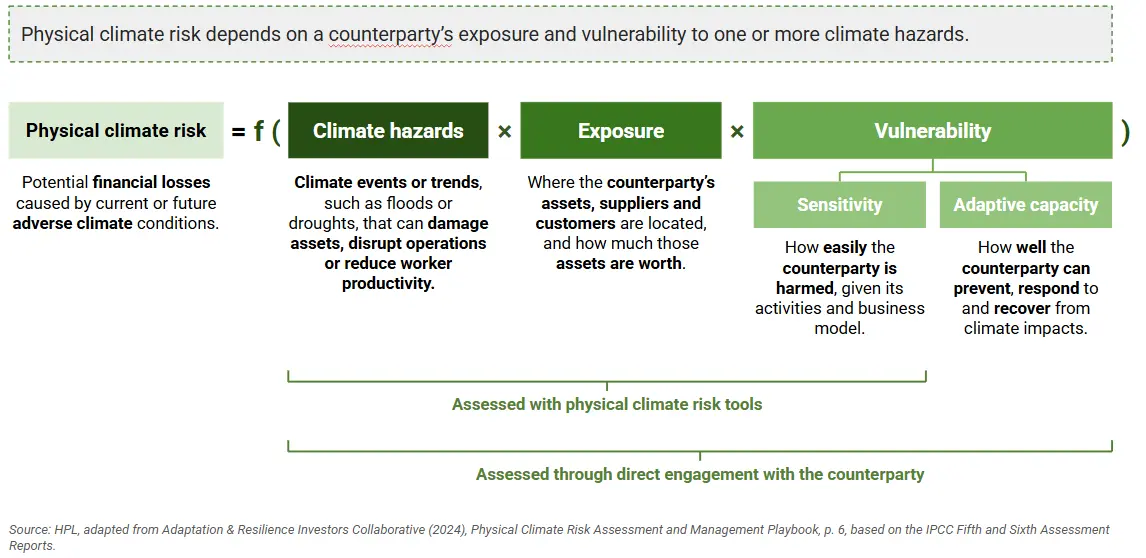
Figure 1. Key Components of Physical Climate Risk [1]
Climate hazards refer to events or trends such as floods, droughts, and rising temperatures; exposure reflects the location and value of a counterparty’s assets and operations; and vulnerability depends on how sensitive the counterparty is to these hazards and its capacity to adapt, respond, and recover. Together, these factors determine the potential financial losses a counterparty may face from climate-related events and long-term changes. [1]
Physical climate risks affect banks mainly through their impact on borrower’s repayment capacity and collateral values. Climate-related hazards can damage assets, disrupt operations, and reduce borrowers’ income, increasing the likelihood of default. They can also the value of assets used as collateral, potentially increasing banks’ losses in an event of default. Research reviewed by the Basel Committee supports these transmission channels, linking weather-related disasters to higher default probabilities in non-performing asset ratios. [2]
While banks are increasingly assessing these risks, turning those assessments into credit decisions is another story. A 2023 UNEP FI survey found that only 22% of banks globally had measured their exposure to physical risks, while 52% are still in the process of doing so. In Latin America and the Caribbean (LAC), implementation also remains limited: 23% of financial institutions surveyed reported fully considering physical climate impacts in financing decisions, highlighting the gap between identifying risks and integrating them into lending processes. [3]
This article explores how banks in LAC are assessing physical climate risks and integrating them into credit decisions, drawing on emerging practices to highlight progress, persistent challenges, and opportunities for further integration.
From risk assessment to credit decisions: What are banks doing?
How banks assess physical risk
Banks typically assess physical climate risks by combining geolocation data on borrowers’ assets and operations with climate hazard information to identify potential exposure to floods, droughts, and other hazards. [4] Climate scenarios, such as those developed by the NGFS, help evaluate how these risks may evolve over time. [1] However, a comprehensive assessment also requires information on borrowers’ vulnerability and adaptive capacity, which often needs to be collected through direct client engagement. [5]
How assessments can inform credit decisions
To inform credit decisions, physical climate risk assessments need to be translated into financial impacts and credit risk metrics. Climate-related hazards can increase a borrower’s probability of default (PD) by weakening repayment capacity and increase loss given default (LGD) by reducing collateral values. [4] Methodologies developed by UNEP FI and participating banks illustrate how estimated impacts on borrowers’ revenues and costs can inform credit ratings, while changes in property values can affect loan-to-value (LTV) ratios. [6]
These assessments can inform different aspects of credit risk management:
- Underwriting: Adjusting borrower ratings, establishing loan conditions, and reviewing collateral valuations.
- Pricing: Adjusting loan terms or offering preferential conditions to borrowers investing in resilience measures.
- Portfolio management: Incorporating physical climate risk indicators and exposure limits into the bank’s risk appetite framework. [4]
However, systematically integrating physical climate risks into quantitative credit risk parameters remains a challenge, as highlighted by the European Central Bank. [4]
What Itaú, Bradesco and BBVA are doing
Itaú Unibanco integrates climate risk into its credit ratings. Clients in sensitive sectors are assessed at credit approval and renewal for physical risks such as changes to the hydrological cycle and susceptibility to water scarcity. For large corporate, infrastructure and energy, and agribusiness clients, this assessment of climate sensitivity, which covers both physical and transition effects, feeds into the models that calculate their credit rating. That rating serves as a basis for pricing and capital allocation. [7]
Bradesco uses AdaptaBrasil’s municipal and sector indices to classify each client’s exposure to acute and chronic hazards. It can adjust client ratings through an override mechanism that reflects exposure to climate-related risks. In 2025, it renewed its sectoral and territorial sensitivity study with a focus on water scarcity. It found localised effects, but none large enough to trigger rating downgrades or a revision of credit limits. [8]
BBVA has developed BBVA Adapta, an in-house tool that combines hazard projections under different scenarios with the geolocation and vulnerability of exposed assets to estimate potential damage and losses in asset value. [9] The bank has also built its own drought and flood models and integrated water-related variables into its credit admission processes. The integration of physical and transition risks into its rating models, its ICAAP, and its capital and provisioning engines is still in progress. [10]
Across the three banks, physical risk is already part of client assessment and portfolio monitoring. Its systematic translation into PD, LGD, pricing and provisions, however, is either recent, reported only at a general level, or still under development.
Looking ahead — What is needed to bridge the implementation gap in LAC?
The experience of Itaú, Bradesco and BBVA shows that the building blocks for using physical risk in credit decisions already exist. Extending them across the region’s banking sector, however, runs into three constraints.
Data quality and geolocation
Assessing physical risks requires reliable, location-specific information on borrowers’ assets, operations and vulnerability. Yet climate-related data at entity and asset level often lack specific location information. [11] The tools reviewed in UNEP FI’s banking programme had asset location data mainly for listed companies, not for unlisted firms or SMEs. They also rarely captured the design, age and condition of assets, which shape how a hazard will affect them. [5] Early pilots by Itaú and Bradesco with UNEP FI ran into the same issue: Itaú had to approximate where its agricultural clients’ production areas were, and Bradesco’s flood study of its mortgage portfolio covered only areas already exposed to flooding. [5],[6]
Methodological limitations
Even with good data, translating hazards into credit risk metrics remains complex. The Basel Committee notes that existing analysis does not generally translate changes in climate variables into changes in banks’ credit risk exposures or balance sheet losses. [2] Existing methodologies often rely on assumptions and incomplete data, while challenges persist in capturing interacting hazards, borrower adaptation measures and their effects on default probabilities and collateral values.
Technical capacity and integration into credit processes
Many banks still lack the expertise, tools and internal processes needed to systematically incorporate physical climate risks into credit assessments. Strengthening collaboration between risk management, credit and commercial teams will be essential to moving beyond standalone climate risk analyses.
Ultimately, banks do not need to wait for perfect models to begin integrating physical climate risks into lending decisions. Starting with available data and tools, prioritizing the most exposed portfolios, and progressively refining methodologies can help financial institutions move from identifying climate risks to managing their financial implications.
—
Emilia Rochette is an Analyst at HPL. She holds a Bachelor’s degree in Environmental Studies from the University of North Carolina at Chapel Hill, with minors in Economics and Data Science. At HPL, she supports sustainable finance advisory and business development efforts across Latin America and the Caribbean, contributing to research, analysis, and client deliverables.
—
[1] Adaptation & Resilience Investors Collaborative (2024), Physical Climate Risk Assessment and Management Playbook. Available online.
[2] Basel Committee on Banking Supervision (2021). Climate-related risk drivers and their transmission channels. Available online.
[3] UNEP FI, FELABAN, CAF, ALIDE (2023). Cómo los Bancos de América Latina y el Caribe se Adaptan al Cambio Climático. Available online.
[4] UNEP FI (2024), Managing physical climate-related risks in loan portfolios: Technical Supplement to the 2024 Climate Risk Landscape Report. Available online.
[5] UNEP FI, Acclimatise (2020), Charting a New Climate: State-of-the-art tools and data for banks to assess credit risks and opportunities from physical climate change impacts. Available online.
[6] UNEP FI, Acclimatise (2018), Navigating a New Climate: Assessing credit risk and opportunity in a changing climate. Part 2: Physical risks and opportunities. Available online.
[7] Itaú Unibanco (2026), Environmental, Social and Climate Risks and Opportunities Report (ESC Report). Available online.
[8] Banco Bradesco (2026), ESG Report 2025. Available online.
[9] BBVA (2026), BBVA measures and shares climate physical risk assessments with its clients. Available online.
[10] BBVA (2026), BBVA integra la gestión del agua en su marco de riesgos climáticos y ambientales. Available online.
[11] Network for Greening the Financial System (2022), Final report on bridging data gaps. Available online.