
While the international community is trying to remedy and reverse the damage done to the environment, the effects of climate change have reached the whole planet. Although droughts, floods, and natural disasters damage all populations and the economy itself, not everyone is impacted to the same extent. Vulnerable people, especially in developing countries, are disproportionately affected by climate emergencies, and the actions taken in response must be differentiated and contextualized.
A just transition would support the achievement of climate goals without ignoring the negative impact on the most vulnerable groups. The International Labour Organization (ILO) defines the concept as the: “Greening of the economy in a way that is as fair and inclusive as possible to everyone concerned, creating decent work opportunities and leaving no one behind.”[1]
In emerging economies, people in the agriculture and forestry sector are especially at risk.[2] As they are highly dependent on environmental conditions, climate change poses a great threat to their livelihood and the global food crisis.[3] The discrimination of women makes them even more vulnerable to these negative effects. This is particularly true in the case of rural and indigenous women, whose living conditions and marginalization expose them to a greater degree.
Gender-Responsive Just Transition
Climate change is not being addressed through a gender lens, which puts women in an especially vulnerable position.[4] If gender equality outcomes are not included when financing mitigation and resilience solutions, in a catastrophic scenario, it is estimated that the climate crisis may push up to 158.3 million more women and girls into poverty worldwide (16 million more than the total number of men and boys).[5]
In Latin America and the Caribbean (LAC), the gender wage gap may explain why there is a higher incidence of poverty in female-headed households. A study conducted in 16 countries in the region revealed that 26% of these households were poor, compared to 17% of homes led by men.[6] Furthermore, close to 60 million women in the region live in rural areas, but only 30% of them own agricultural land, with only 10% having access to credit and 5% to technical assistance programs.[7]
Nonetheless, women across the region can play a critical role in reducing carbon emissions because of their high participation in the agricultural sector through the implementation of sustainable practices in their activities.[8] According to the World Bank, in 2022 the agricultural sector, combined with changes in land use and deforestation, represented 47% of the region’s CO2 emissions.[9] Moreover, on average, women hold 20% of agricultural jobs in Latin America, although in some countries this number is higher.[10]
The real problem lies in the fact that, to date, resources that explicitly target initiatives that promote women empowerment are still limited. Although over time climate action funding has been increasing, the official development assistance (ODA) for climate focused on gender equality as a “core objective” only received USD 778 million between 2018-2019, representing only 2.4% of all climate-related ODA[11]
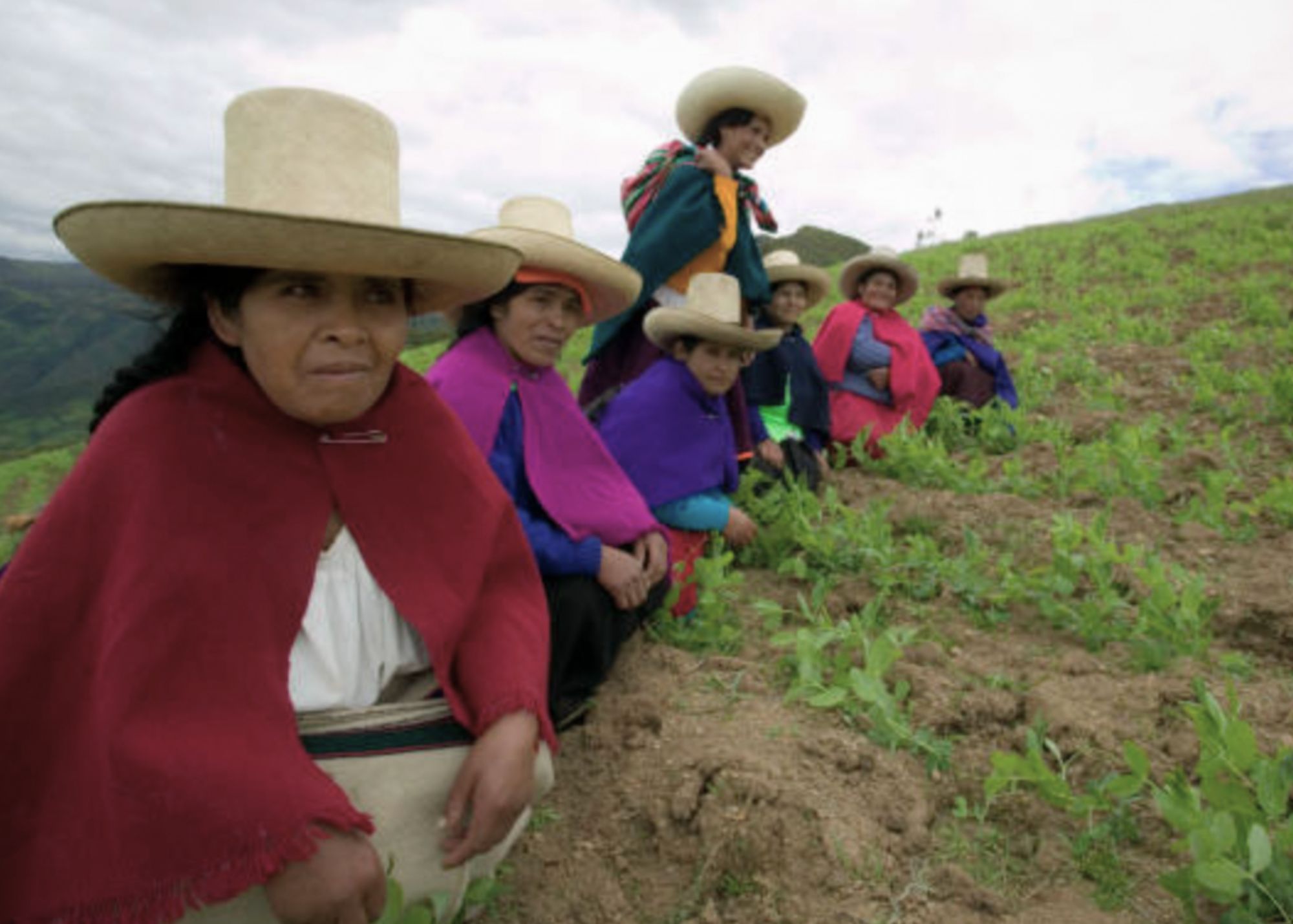
Source: iStock Images. Rural Women in Peru, Fawn-Love
A just-transition to a sustainable, low carbon economy presents opportunities to address gender inequalities in the labor market. A gender-responsive just transition not only addresses the issue of gender equality, but does so in a cross-cutting approach considering factors such as vulnerability, poverty, among others. The foundations of a gender-responsive just transition focus on gender equality and the implementation of economic policies that respond to the needs of all people, defending the principle of inclusion without distinction on the basis of sex, income, age, race, ethnicity, gender identity and sexual orientation, among others.[12]
Directing the necessary resources to establish opportunities for this sector is the first step to ensure a just transition with a gender focus.
Driving a Gender-Responsive Just Transition
Sustainable finance has the potential to generate a positive impact on both the environment and society. Through thematic instruments, such as sustainable, social, and gender bonds and loans, resources are directed towards projects that foster the development of initiatives that address global challenges, such as achieving gender equality.
Gender-focused social bonds and loans can be allocated to programs that provide tangible and measurable results for women. In particular, these instruments are specifically directed towards target populations, such as vulnerable or disadvantaged situations. Through financing frameworks that follow the Social Bond Principles (2023) of the International Capital Markets Association (ICMA), issuers commit direct resources to these types of projects.
For example, in 2019, Banistmo, part of Grupo Bancolombia, became the first gender social bond issuer in Latin America. The US$50 million issuance was carried out in collaboration with IDB Invest, making Panama the first Latin American country with a gender-focused bond.[13] This transaction allocated all of its proceeds to expand access to financing for small and medium sized enterprises (SMEs) led by women, to promote the economic empowerment of women in the country.
Subsequently, in 2020, Davivienda in Colombia issued a US$100 million social bond with a gender focus. The resources were allocated to finance the growth of the portfolio of SMEs led by women, as well as the purchase of affordable social housing by women.[14] And more recently (2023), the Financial Institution Pro Mujer in Argentina issued a gender-focused bond for US$1.06 million to promote the advancement and empowerment of women in the country.
Conclusions
Although the gender bond market in LAC has been scarce, financial institutions in countries such as Panama, Colombia, Mexico, Peru, Ecuador, Brazil and Argentina have started to take the first step towards achieving a gender just transition by financing programs with real impact on women.
The discussion should focus on ensuring that existing funding is explicitly directed towards initiatives focused on a sector that is extremely vulnerable to climate change. Funding for gender equality must address structural issues that to date pose a barrier of opportunities for women and girls around the world. Gender-focused thematic instruments offer front-line support that seeks to engage women in the economic transition in a fair, inclusive and differentiated way.
—
Sofía Saldívar is an Analyst at HPL, with a B.A. in International Relations from the Instituto Tecnológico Autónomo de México (2022). She has experience in the analysis and interpretation of information, as well as in communicating with stakeholders from the public and private sectors.
—
References
[1] International Labour Organization (2023). Frequently Asked Questions on just transition. Available here.
[2] Oxfam International (n.d). Las mujeres rurales de América Latina y El Caribe frente al cambio climático. Available here.
[3] Ídem.
[4] Teresa Burelli (2022). El cambio climático, la nueva amenaza para la inclusión de las mujeres en Latinoamérica. BBVA. Available here.
[5] UN Women (2023). A gender-responsive just transition for people and planet. Available here.
[6] Nora Libertun (2023). How does the IDB Group support the development of women in cities?. IDB. Available here.
[7] Teresa Burelli (2022). El cambio climático, la nueva amenaza para la inclusión de las mujeres en Latinoamérica. BBVA. Available here.
[8] Ídem.
[9] Banco Mundial (2022). El Banco Mundial hace un llamado urgente a la acción climática en América Latina y el Caribe. Available here.
[10] PNUD (2023). Las voces de las mujeres rurales en América Latina y el Caribe ante las crisis multidimensionales. Available here.
[11] OECD (2022). Development Finance for Gender Responsive Climate Action. Available here.
[12] UN Women (2023). A gender-responsive just transition for people and planet. Available here.
[13] IDB Invest (2019). BID Invest y Banistmo, filial del Grupo Bancolombia, anuncian la emisión del primer bono de género en América Latina. Available here.
[14] IDB Invest (2020). BID Invest estructura el primer bono social de género del mundo con incentivos vinculados a objetivos, emitido por Davivienda. Available here.
[15] ICMA (2023). The Social Bond Principles. Available here.
[16] UNDP (2023). What does gender equality have to do with climate change?. Available here.
[17] IMF (2021). Advancing gender equality through climate action. Available here.
[18] UNDP (2022). What is just transition? And why is it important?. Available here.