
The ocean plays a fundamental role in regulating the global climate, maintaining biodiversity, and sustaining billions of people. The ocean covers more than 70% of the planet’s surface and, as the Earth’s largest collector of solar energy, has the unique ability to absorb and store large amounts of heat without causing a significant increase in temperature, acting as a stabilizing force in the Earth’s climate system. However, the heat already stored in the deepest layers of the ocean will eventually be released, causing at least some additional warming of the Earth’s surface in the future. Currently, the ocean stores about 91% of the excess heat trapped in the Earth’s climate system by greenhouse gases. This contributes to sea level rise, marine heat waves, coral bleaching, and the melting of glaciers and ice sheets that end up in the ocean around Greenland and Antarctica [1].
The World Bank estimates that the ocean economy currently generates over USD 1.5 trillion in annual global GDP, with projections indicating it could expand to around USD 3 trillion by 2030 [2]. Beyond its current economic contribution, investing in a sustainable blue economy represents a major growth opportunity. By 2050 the ocean could produce up to six times more ocean-based goods such as sustainably sourced seafood, low-impact aquaculture, or ocean-derived biomaterials, while ocean-based renewable energy, lead primarily by mature and commercially viable offshore wind technologies, could increase fortyfold. Other marine energy sources, including tidal, wave, and Ocean Thermal Energy Conversion (OTEC), continue to progress but remain in early stage deployment due to higher costs and technical constraints [3].The cumulative economic benefits of sustainable ocean investments could reach USD 15.5 trillion by mid-century, and a sustainable blue economy could generate approximately 12 million new jobs by 2030 [4]. Despite its fundamental role in sustaining life, regulating the climate, and economic potential, marine and coastal ecosystems remain largely underfunded: over the past decade, less than 1 percent (about USD 13 billion) of the total estimated value of key ocean assets has been directed to sustainable projects, mainly through philanthropy and official development assistance [5].
Understanding Blue Finance for Ocean Sustainability
Blue finance refers to a growing segment of sustainable and climate finance focused on mobilizing capital toward the preservation and sustainable use of ocean and water resources in areas such as water and wastewater management, reducing ocean plastic pollution, marine ecosystem restoration, sustainable shipping, eco-friendly tourism, and offshore renewable energy [6]. As defined by the United Nations Environment Programme Finance Initiative (UNEP FI), a sustainable blue economy is one that “provides social and economic benefits for current and future generations; restores, protects and maintains diverse, productive and resilient ecosystems; and is based on clean technologies, renewable energy and circular material flows.” [7]
Within this broader framework, ocean finance, a core component of blue finance, focuses specifically on mobilizing resources for the sustainable management of marine and coastal ecosystems. It translates the principles of the blue economy into practical financial mechanisms that promote conservation, climate resilience, and economic opportunity across ocean-based sectors. It encompasses a diverse range of instruments and approaches designed to promote economic growth, climate resilience, and ecosystem protection in marine and coastal environments (see Figure 1).
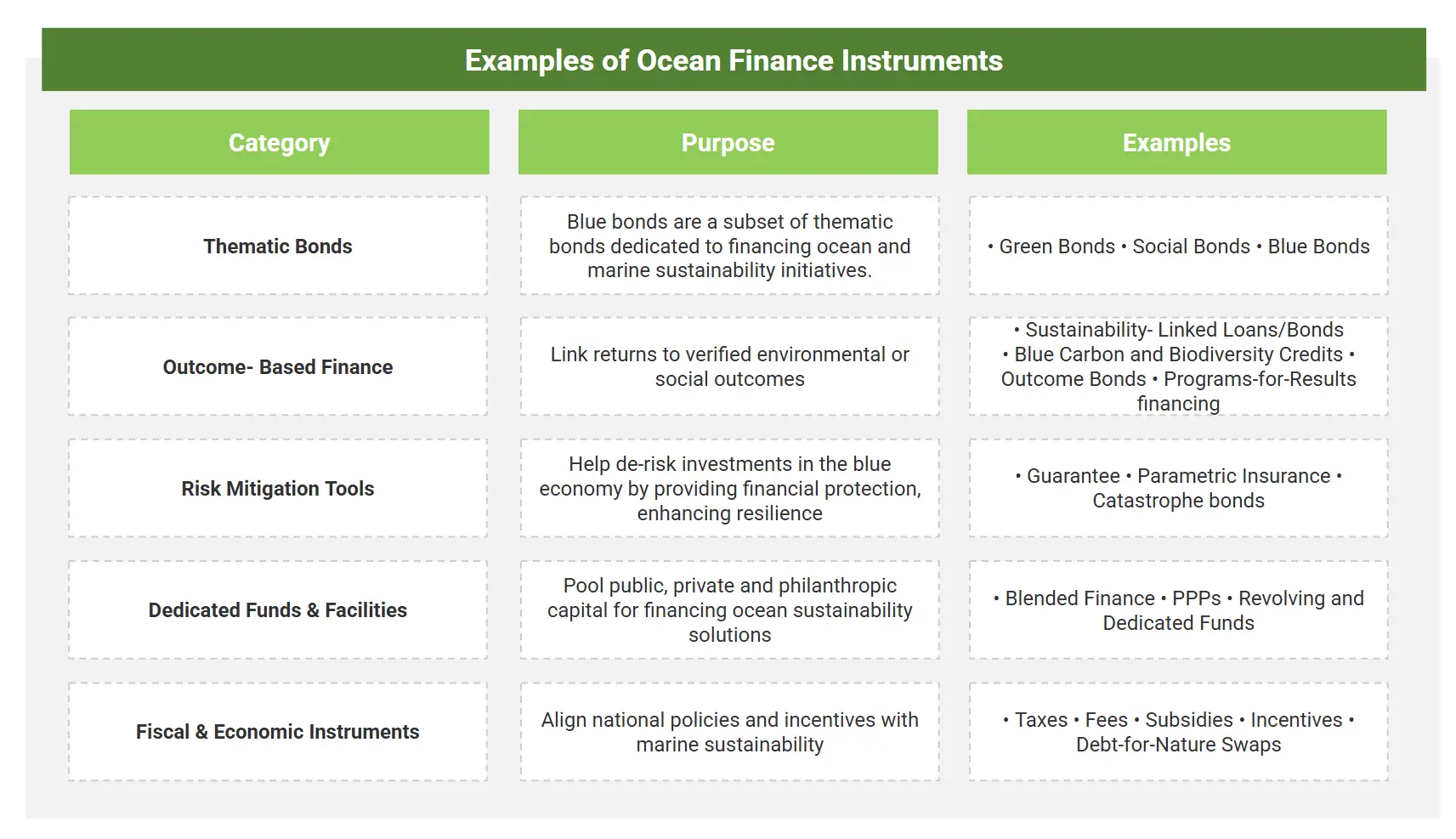
Figure 1. Key Instruments in Ocean Finance
Source: PROBLUE 2025
The growing diversity of ocean finance instruments is supported by an emerging ecosystem of international frameworks and guidance that aim to standardize practices and enhance credibility across markets. At the core of this architecture are the ICMA Principles, which provide the foundational standards for structuring use of proceeds instruments, including blue bonds, and underpin many of the specialized blue finance frameworks that have since emerged. The UNEP Finance Initiative’s Sustainable Blue Economy Finance Principles (2018) built on this foundation by establishing the first global framework to align financial flows with ocean sustainability objectives. Also, the International Finance Corporation (IFC) has developed operational guidance to help investors, issuers, and financial institutions design and implement blue-labelled instruments. Meanwhile, the OECD’s Sustainable Ocean for All Programme provides development countries with policy pathways to integrate ocean finance into broader sustainable development strategies, while CAF’s Blue Recovery Program – launched in 2025 – aims to double funding for the oceans ($2.5 billion for 2025-2030) to support low-carbon maritime transport, coral reef restoration, and blue tourism.
Together, these initiatives are shaping a coherent foundation for scaling the blue economy, providing a set of standards and tools for public and private actors to mobilize capital responsibly.
Innovating for the Ocean: Case Studies
As ocean finance matures, a growing number of countries and organizations are piloting innovative mechanisms that combine financial performance with ocean sustainability outcomes. The following examples illustrate how different financial instruments are being used to protect marine ecosystems, enhance coastal resilience, and align economic development with conservation objectives.
Case 1: The Seychelles Blue Bond. The Seychelles Blue Bond was the world’s first sovereign blue bond in 2018, raising $15 million to support marine conservation and sustainable fishing. It was developed with technical assistance from the World Bank, with a partial credit guarantee of $5 million, and was supported by the Global Environment Facility (GEF), which provided concessional financing to reduce borrowing costs and attract private investors. The proceeds were allocated to two financing vehicles: the Blue Grant Fund, which supports marine protection and biodiversity projects, and the Blue Investment Fund, which provided concessional loans to small-scale fisheries. The initiative helped Seychelles designate 30% of its exclusive economic zone as marine protected areas and strengthen fisheries governance [8].
Case 2: The Mesoamerican Reef (MAR) Insurance Program. The MAR, which spans Belize, Guatemala, Honduras, and Mexico, is the largest barrier reef in the Atlantic Ocean and faces increasing threats from hurricanes and extreme weather conditions. To address this situation, the MAR Parametric Insurance Program was created to ensure the rapid allocation of funds for coral and reef restoration. The mechanism provides immediate payments after storms to fund reef rehabilitation following hurricanes, based on pre-agreed triggers such as wind speed and storm intensity, eliminating delays associated with site assessments. This mechanism was led by the MAR Fund, with technical design by Willis Towers Watson and co-financing from the InsuResilience Solutions Fund. Following Hurricane Lisa (2022), payments were made within days, demonstrating how parametric climate insurance can strengthen ecosystem resilience and protect coastal livelihoods within the ocean finance toolkit [9].
Case 3: Belize Blue Bond and Debt-for-Nature Swap. Belize executed a landmark blue bond and debt-for-nature swap, restructuring USD 553 million in sovereign debt, equivalent to one-quarter of its national debt, while securing USD 180 million for long-term marine conservation, making it the largest transaction of its kind for ocean conservation. Facilitated by The Nature Conservancy (TNC) and financed through Credit Suisse and the U.S. International Development Finance Corporation (DFC), the deal enabled Belize to repurchase its “Superbond” at a discount, channeling fiscal savings into both annual conservation payments and the establishment of an endowment fund. The agreement commits the government to expand marine protected areas to 30% of its ocean territory by 2026 and maintain a legally binding conservation endowment. The transaction aligns fiscal stability with biodiversity goals, setting a global precedent for how debt-for-nature swaps can deliver both economic relief and conservation outcomes [10].
Together, these cases demonstrate the versatility of ocean finance as a bridge between economic and environmental priorities. Whether through sovereign bonds, parametric insurance, or debt conversions, these instruments show how innovative financial structures can mobilize private and public capital at scale.
Enablers and Constraints in the Ocean Finance Landscape
Despite blue finance growing momentum, ocean finance still faces a number of structural challenges that can limit the scale and pace of investment. Institutional capacity constraints in many countries can slow the development and implementation of complex transactions, particularly those requiring multisector coordination. Regulatory and policy inconsistencies, including varying definitions, eligibility criteria, and disclosure expectations across jurisdictions, can create uncertainty for investors and reduce comparability across instruments. On the technical side, the application of metrics, taxonomies, and impact monitoring frameworks remains uneven, which can increase transaction costs and make outcome measurement more complex in practice. Market related challenges, such as high structuring costs, small deal sizes, and perceptions of elevated risk, continue to limit the participation of large-scale investors. Finally, ensuring inclusive stakeholder engagement and transparent governance processes remains essential to build local ownership and long term credibility in ocean-focused initiatives [11][12].
While these challenges remain significant, a number of emerging opportunities have the potential to strengthen the foundations for scalable and credible ocean finance. Strategic financial design, through layered capital structures, blended finance, and credit enhancements, is helping to reduce investment risk and attract private participation, while the design of legally binding frameworks would ensure the continuity of conservation outcomes beyond political cycles. Stronger governance and institutional coordination can improve accountability through independent verification and transparent impact metrics, and community engagement plays a critical role in strengthening local ownership. At the same time, innovation and technology can reduce transaction costs, improving traceability and expanding access to ocean finance opportunities. Together, these enablers represent the groundwork for transitioning ocean finance from a nascent initiative to a transformative force capable of driving sustainable ocean investment in a widespread manner [13].
Looking ahead, the growing global momentum for ocean action underscores the need to move from pilot initiatives to the practical adoption of ocean finance solutions. To achieve the necessary scale, blue assets will need to be integrated into national sustainable finance strategies and taxonomy frameworks, ensuring policy coherence and long-term capital alignment. Collateral economic benefits, such as job creation, tourism resilience, and risk mitigation, can help position ocean sustainability as both a climate and development priority. Strengthening public-private partnerships will be essential to mobilize investments in coastal resilience, clean shipping, and marine restoration, while building robust databases will improve transparency and investor confidence. Ultimately, the way forward is to transform the ocean from a vulnerable resource into a resilient asset class, capable of sustaining economies, communities, and ecosystems for generations to come.
—
Brenda Aguilar is an analyst at HPL, graduated with honors from the Law School of the Universidad Nacional Autonoma de Mexico (UNAM) and graduated with a Bachelor’s Degree in Financial Management at the Instituto Tecnologico Autonomo de Mexico (ITAM). At HPL, she has supported the execution of 13 consulting projects related to the structuring of GSS+ bond Frameworks for financial institutions, development banks and companies in LAC. Additionally, Brenda has contributed to the development of sustainable financing projects by conducting research, comparative studies, capacity building, and supporting the analysis of gaps in the sustainable financing strategies of issuers
—
References
[1] NOAA (2025). Climate Change: Ocean Heat Content. Available here.
[2] United Nations. Department of Economic and Social Affairs (n.d.). Sustainable blue economy vital for small countries and coastal populations. Available here.
[3] IRENA (2025). Ocean energy. Available here.
[4] Global Ocean Accounts Partnership (2024). Riding the Blue Wave: Unlocking finance for the Sustainable Blue Economy. Available here.
[5] Sumaila, U.R., M. Walsh, K. Hoareau, A. Cox, et al. (2020). Ocean Finance: Financing the Transition to a Sustainable Ocean Economy. Available here.
[6] IFC (n.d.). Blue Finance. Available here.
[7] UNEP FI (n.d.). Sustainable Blue Finance. Available here.
[8] World Bank (2025). Seychelles: Introducing the World’s First Sovereign Blue Bond. Available here.
[9] MAR Fund & WTW (n.d.). Mesoamerican Reef Insurance Programme. Available here.
[10] TNC (2022). Case Study Belize Blue Bonds for Ocean Conservation. Available here.
[11] PROBLUE (2025). Accelerating Blue Finance: Instruments, Case Studies, and Pathways to Scale. Available here.
[12] Sumaila, U.R., M. Walsh, K. Hoareau, A. Cox, et al. (2020). Ocean Finance: Financing the Transition to a Sustainable Ocean Economy. Available here.
[13] PROBLUE (2025). Accelerating Blue Finance: Instruments, Case Studies, and Pathways to Scale. Available here.